
Types of Research Tasks
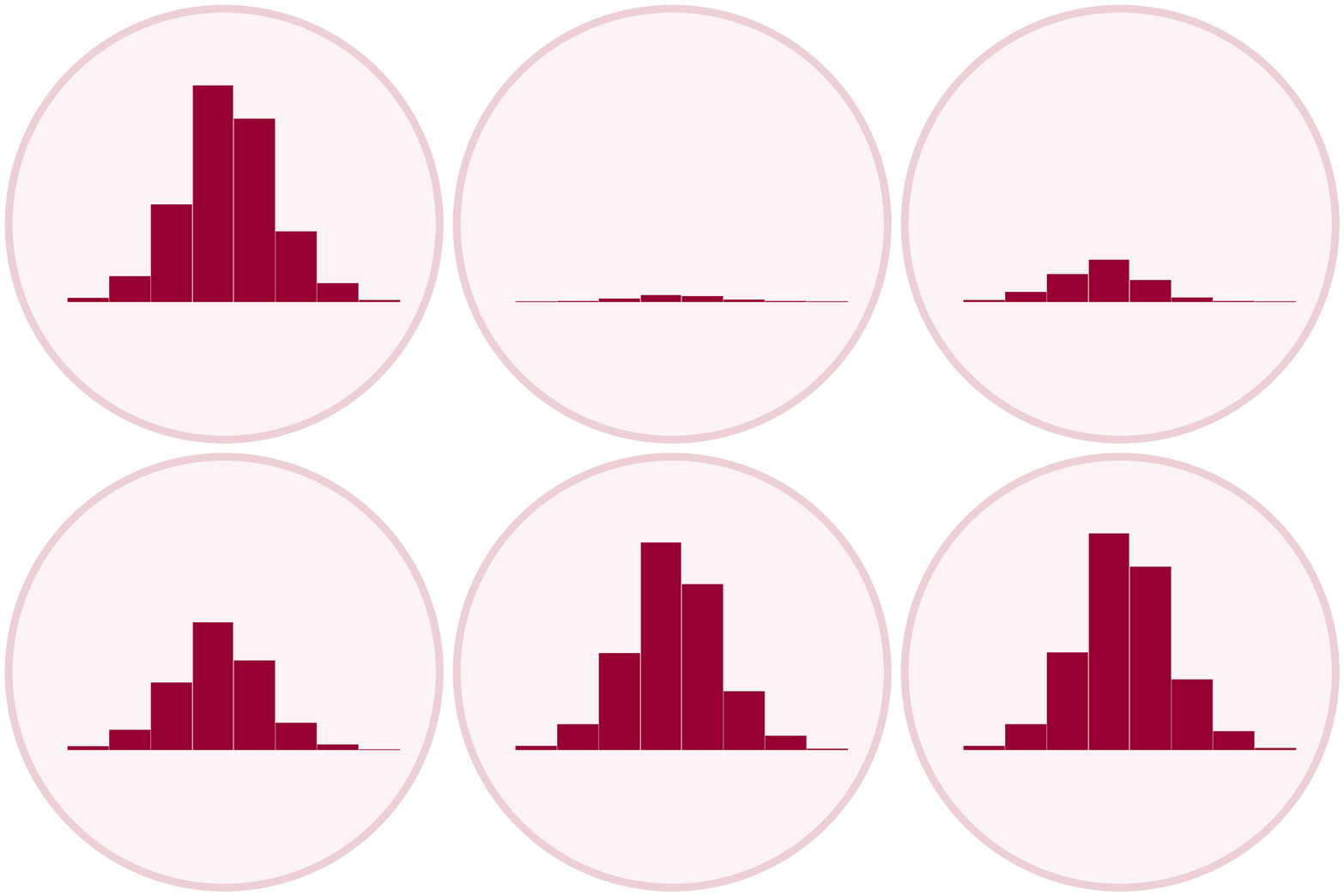
DESCRIPTION
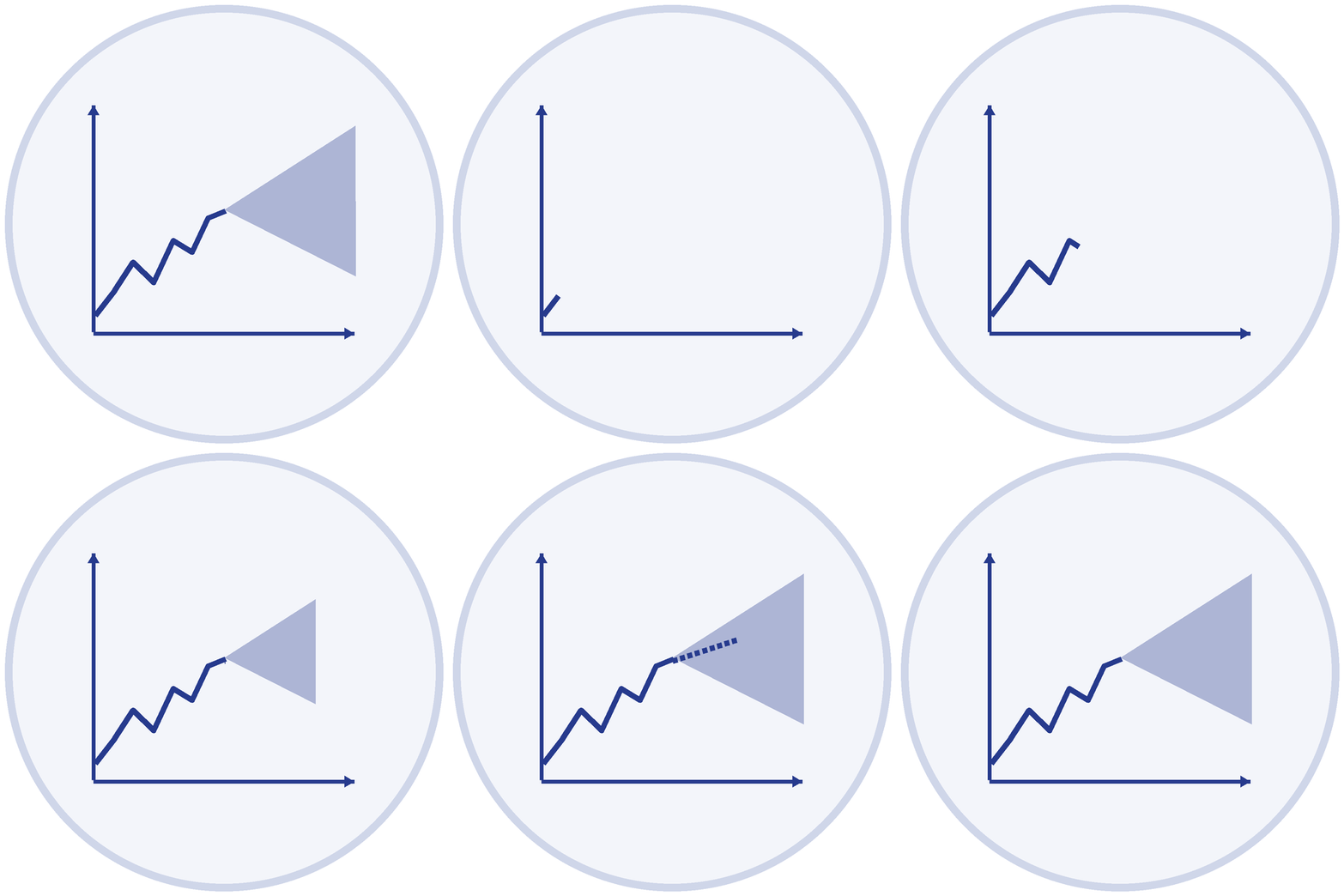
PREDICTION

SIGNAL DISCOVERY
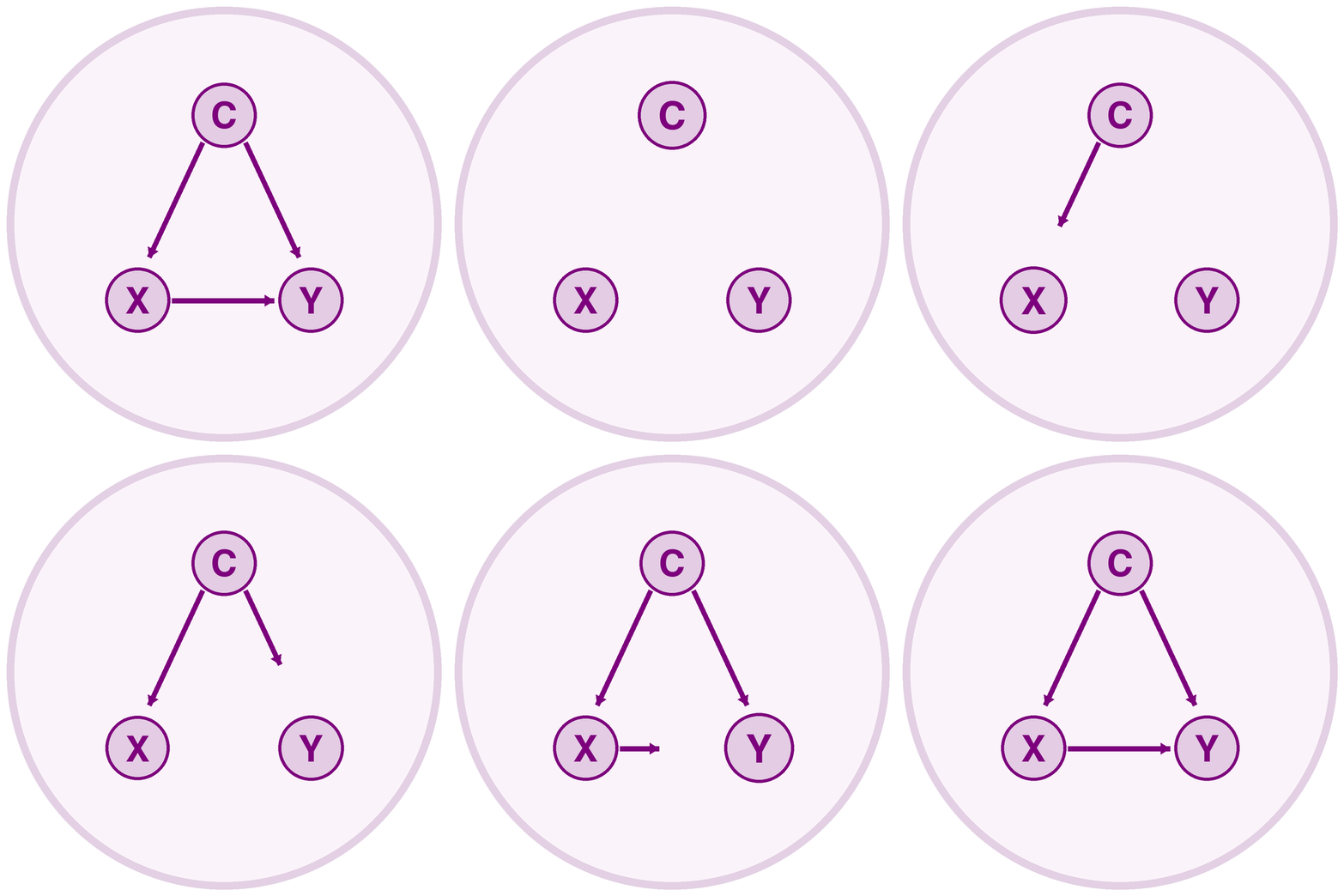
CAUSAL EFFECT ESTIMATION
Description
Estimating the occurrence or distribution of a health state, event, exposure, or practice in a defined population, including how these vary across subgroups and over time. RIGOROUS distinguishes four subtasks within description:
-
Estimating the occurrence or distribution of a health state, event, exposure, or practice in a defined population.
For example, proportion of eligible adults screened for colorectal cancer across PCORnet health systems, 2015–2023.
-
Estimating and comparing the occurrence or distribution of a health state, event, exposure, or practice in multiple populations or predefined subgroups.
For example, colorectal cancer screening coverage by insurance type and age group.
-
Estimating the occurrence or distribution of a health state, event, exposure, or practice over time.
For example, quarterly colorectal cancer screening coverage from 2015 to 2023.
-
Estimating and comparing the occurrence or distribution of a health state, event, exposure, or practice over time and in multiple populations or predefined subgroups
For example, trends in colorectal cancer screening coverage by insurance type from 2015 to 2023.
Signal Discovery
Systematically screening a large set of candidate exposures, outcomes, or both, to identify those warranting further investigation. RIGOROUS distinguishes five subtasks within signal discovery
-
Scanning high-dimensional omic data for associations with a defined outcome, including genome-wide association studies (GWAS) and extensions to other omic layers such as the transcriptome, epigenome, proteome, and metabolome, as well as interaction effects (e.g. gene-environment, gene-gene).
For example, genome-wide scan for common variants associated with type 2 diabetes in UK Biobank, using phenotypes derived from linked hospital and primary care records.
-
Scanning the phenome for associations with a defined exposure, typically a genetic variant (PheWAS).
For example, phenome-wide scan for diagnostic codes associated with an obesity-risk variant (FTO rs9939609) in BioVU, using ICD-coded phenotypes from Vanderbilt EHR data.
-
Scanning the exposome for associations with a defined outcome, including environmental, lifestyle, and occupational exposures (ExWAS).
For example, exposome-wide scan for environmental and lifestyle exposures associated with incident childhood asthma in a multi-site US EHR network.
-
Scanning drug-outcome combinations for previously unrecognised adverse effects (pharmacovigilance) or new therapeutic indications (drug repurposing).
For example, systematic screen of prescription medication classes for associations with acute kidney injury among adults in PCORnet.
-
Scanning any other candidate set for associations with a defined outcome, exposure, or both, using a pre-specified and reproducible screening procedure.
Prediction
Estimating the probability or expected value of a current or future health state or outcome for individuals, based on their characteristics and under observed or expected conditions. RIGOROUS distinguishes two subtasks within prediction:
-
Estimating the probability that a health state is currently present, or the expected current value of a health state.
For example, detection of undiagnosed type 2 diabetes among adults aged 35 and older presenting for routine primary care visits within PCORnet.
-
Estimating the probability of an outcome occurring in the future - or the expected future value of an outcome - conditional on individual characteristics and under observed or expected treatment conditions.
For example, prediction of 5-year cardiovascular event risk among adults aged 40–75 with no prior cardiovascular disease, registered in CPRD primary care practices.
Causal Effect Estimation
Estimating the effects of exposures, treatments, interventions, or policies on outcomes in a defined population, using subject-matter theory and causal assumptions. RIGOROUS distinguishes five subtasks within causal effect estimation:
-
Estimating the causal effect of a single, time-fixed exposure, treatment, intervention, or policy (including its level, dose, or intensity) on an outcome.
For example, the effect of a single dose of influenza vaccine at the start of the 2024/25 season on respiratory hospitalisations among adults in PCORnet.
-
Estimating the causal effect of a treatment strategy sustained or modified over time, of joint or combined regimes involving one or more exposures, or of summary functions of the exposure history (such as cumulative dose, duration, or time-weighted average intensity), on an outcome.
For example, the effect of annual influenza vaccination over five consecutive seasons on respiratory hospitalisations among adults in PCORnet.
-
Estimating how the causal effect of an exposure on an outcome varies across levels of one or more predefined variables, including other concurrent exposures.
For example, whether the effect of influenza vaccination on respiratory hospitalisations differs by smoking status.
-
Decomposing the causal effect of an exposure on an outcome into components operating through and around one or more specified mediators, and/or estimating the effect of intervening on intermediate variables.
For example, the extent to which the effect of influenza vaccination on respiratory hospitalisations operates through serum antibody titre at 4 weeks post-vaccination.
-
Estimating any other well-defined causal estimand in a specified target population or subpopulation, such as effects arising under interference between individuals (e.g. indirect or spillover effects of one individual's exposure on another's outcome).