A framework for quantitative research using routinely collected health data.
- R1 — Recognize the research task
- I2 — Identify estimand(s) and context
- G3 — Gauge data fitness
- O4 — Outline sources of error and bias
- R5 — Run appropriate analyses
- O6 — Outline and assess assumptions
- U7 — Use appropriate language
- S8 — Satisfy reporting and transparency standards

What is RIGOROUS?
RIGOROUS is an eight-step framework designed to help with the design, conduct, and reporting of quantitative research using routinely collected health data.
The framework guides researchers through the research process from identifying the research task to defining the estimand, assessing data fitness, identifying sources of bias, choosing appropriate analyses, evaluating assumptions, using appropriate language, and meeting reporting standards.
The framework has been designed to raise the standard of quantitative health research seeking to inform policy and decision-making, and to enable researchers to demonstrate that standard has been met.
START BY NAMING THE RESEARCH TASK
The type of question determines everything that follows. Different research tasks involve different estimands, biases, assumptions, methods, and language. RIGOROUS is therefore organised around four core tasks:
-
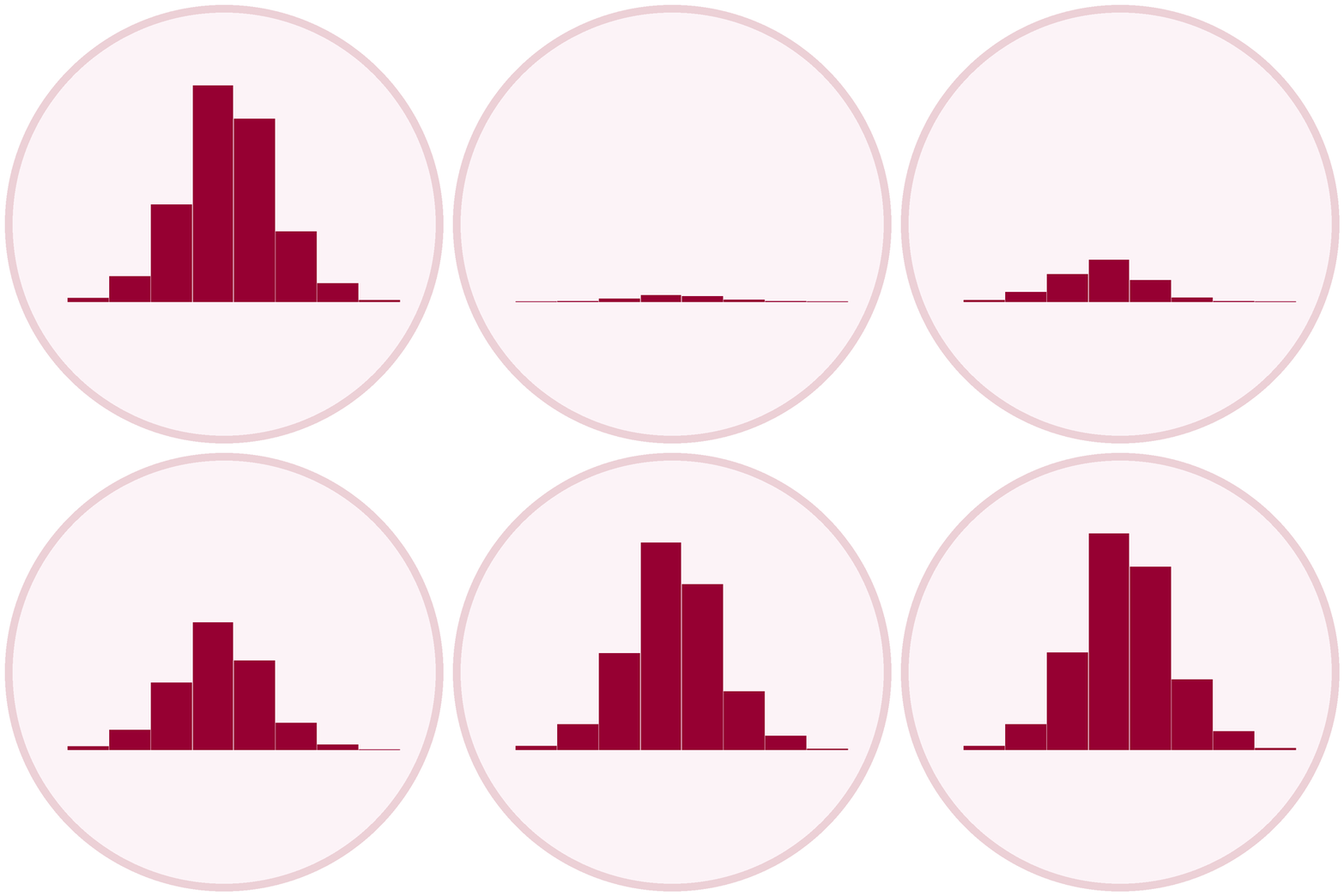
Description
Estimate the occurrence or distribution of a health state, event, exposure, or practice in a defined population.
-

Signal Discovery
Scan many exposures, features, drugs, variants, or outcomes to identify candidate signals for further study.
-

Prediction
Predict current or future outcomes under observed or expected care conditions.
-
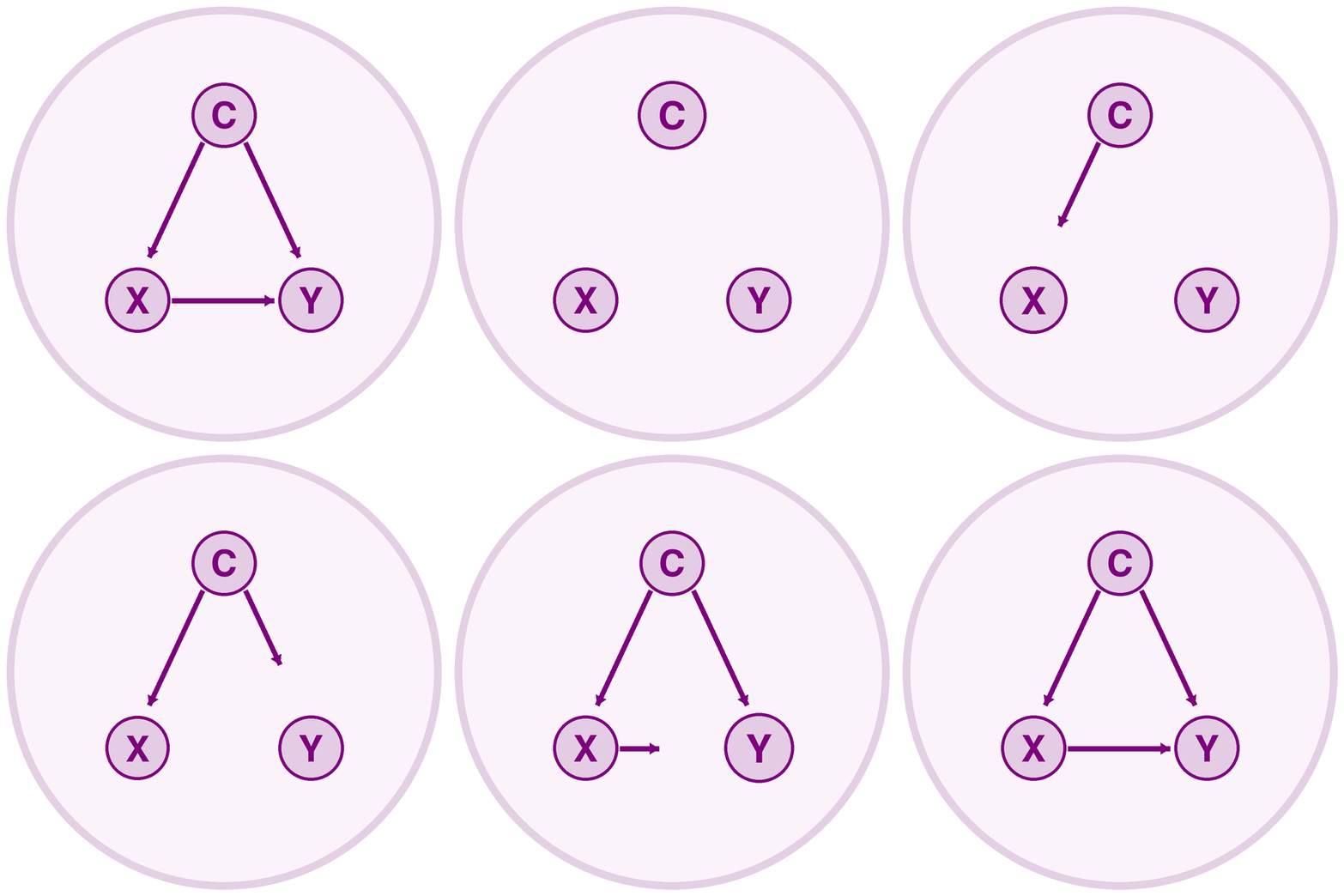
Causal Effect Estimation
Estimate the causal effect of an exposure, treatment, intervention, or policy on an outcome.
We gratefully acknowledge the generous support of the following organizations, whose funding made this work possible.